“ For a few years now, technology has been taking space in my art, whether in my interactive installations or in my paintings with my glitchy animals and my references to computers. But why? Why am I drawn to this, when the topic is everywhere in a negative way?
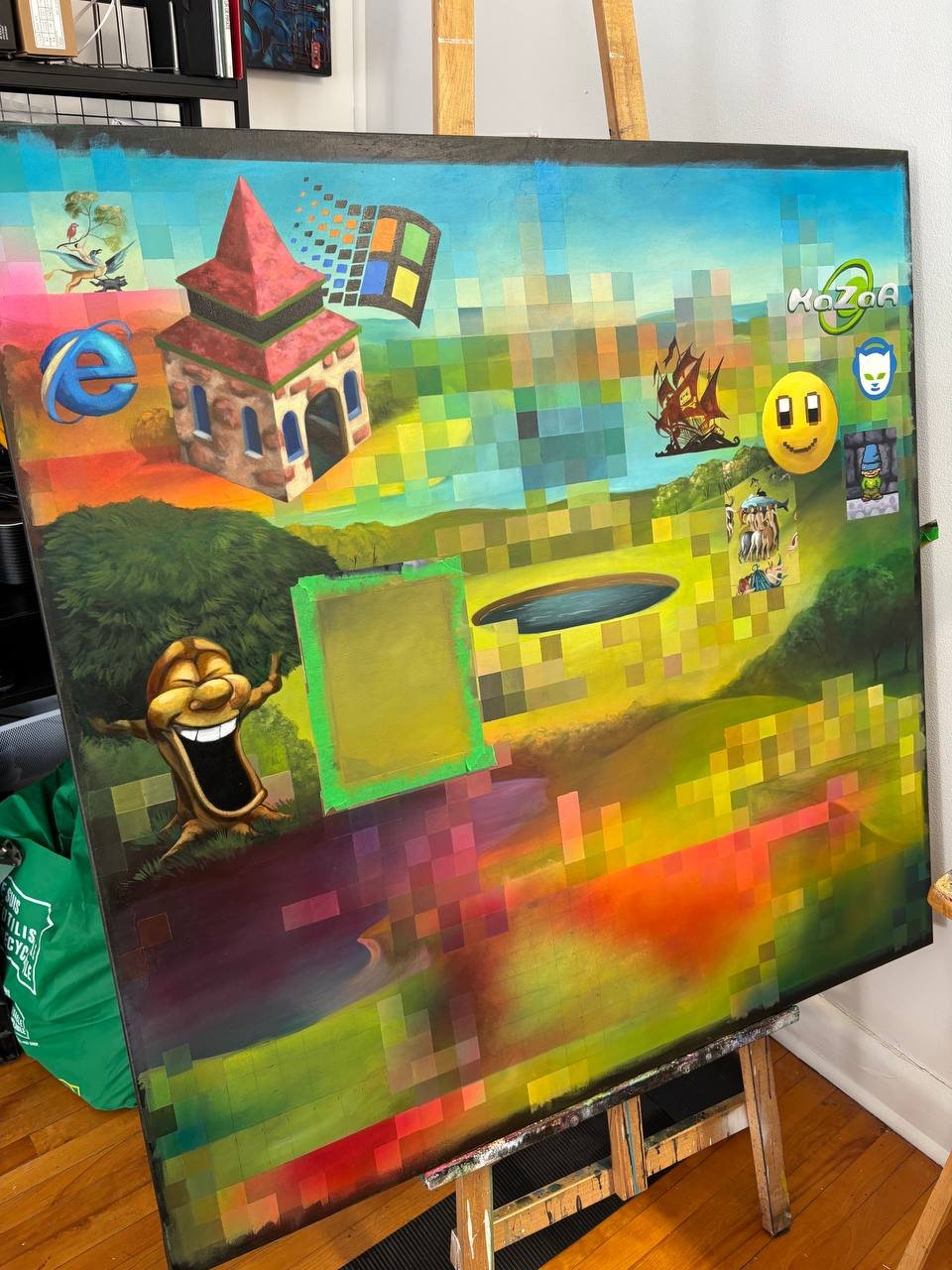
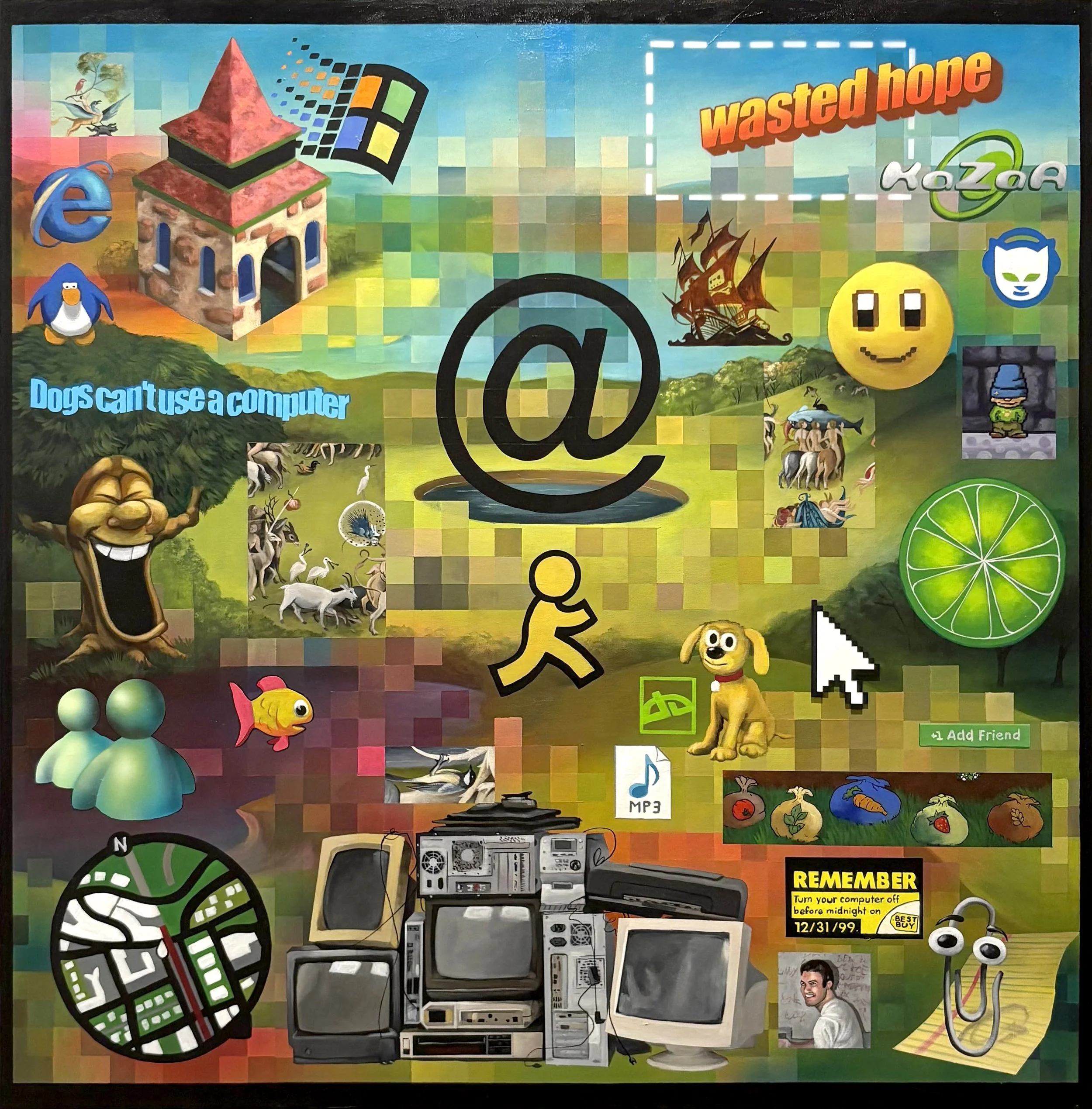
While painting the MSN emoticon, the guy from Icy Tower, the fish from Insaniquarium, the tree from Adibou, the dog from Windows XP… it brought me back. Back to when I was ten, in the school computer lab. To the family PC in my living room. To the game CDs inside cereal boxes. To that enveloping time when technology meant magic, connection, when everything was possible. I posted my drawings on DeviantART, I was even a featured blog on Skyrock. We used to talk with our friends on MSN after school. And when we shut the computer off, it was quiet.
For one or two generations, we grew up in this magical, effervescent technology. For us, it is associated with comfort, nostalgia, friendship, fun.
Today, it has gone too far, it has been tarnished. It’s synonymous with the end of the world, ecological disaster… But our memories, I think we can still honor them. To dive back into this Golden Era and remember the good old days, when you couldn’t use the internet and the phone at the same time. Just because memories are safe. “ -Shana
First Panel - Genesis
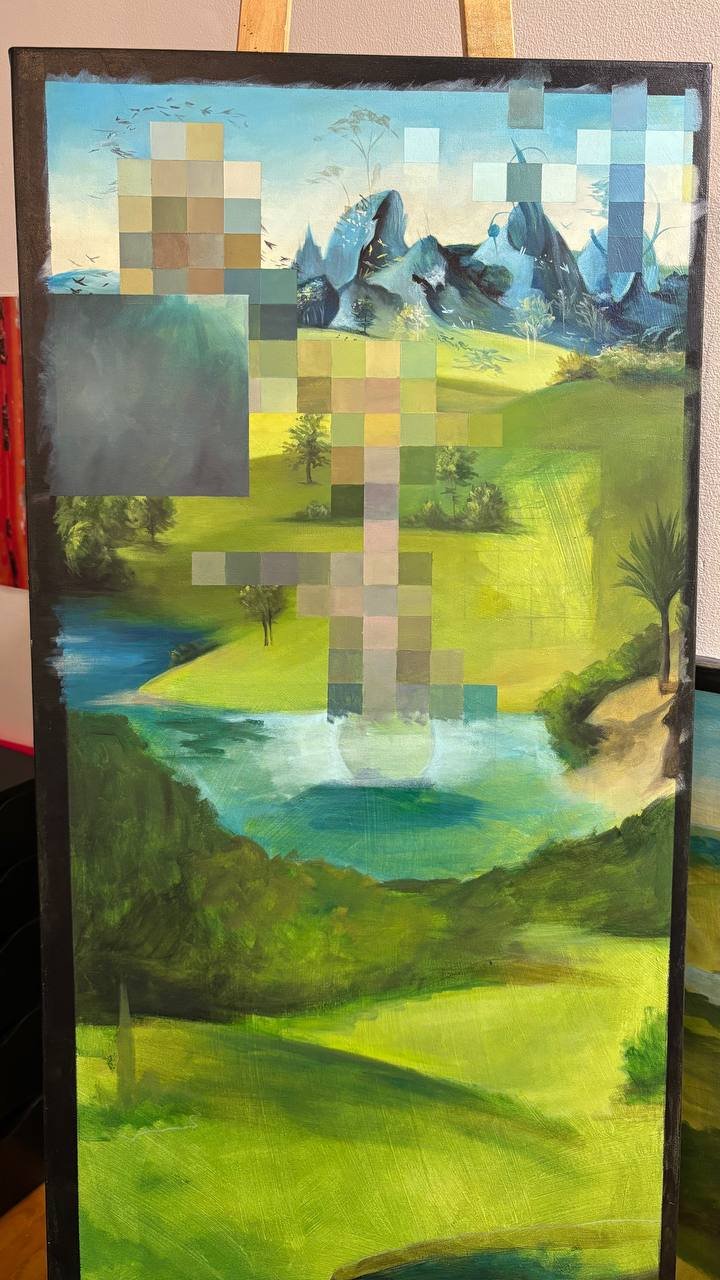
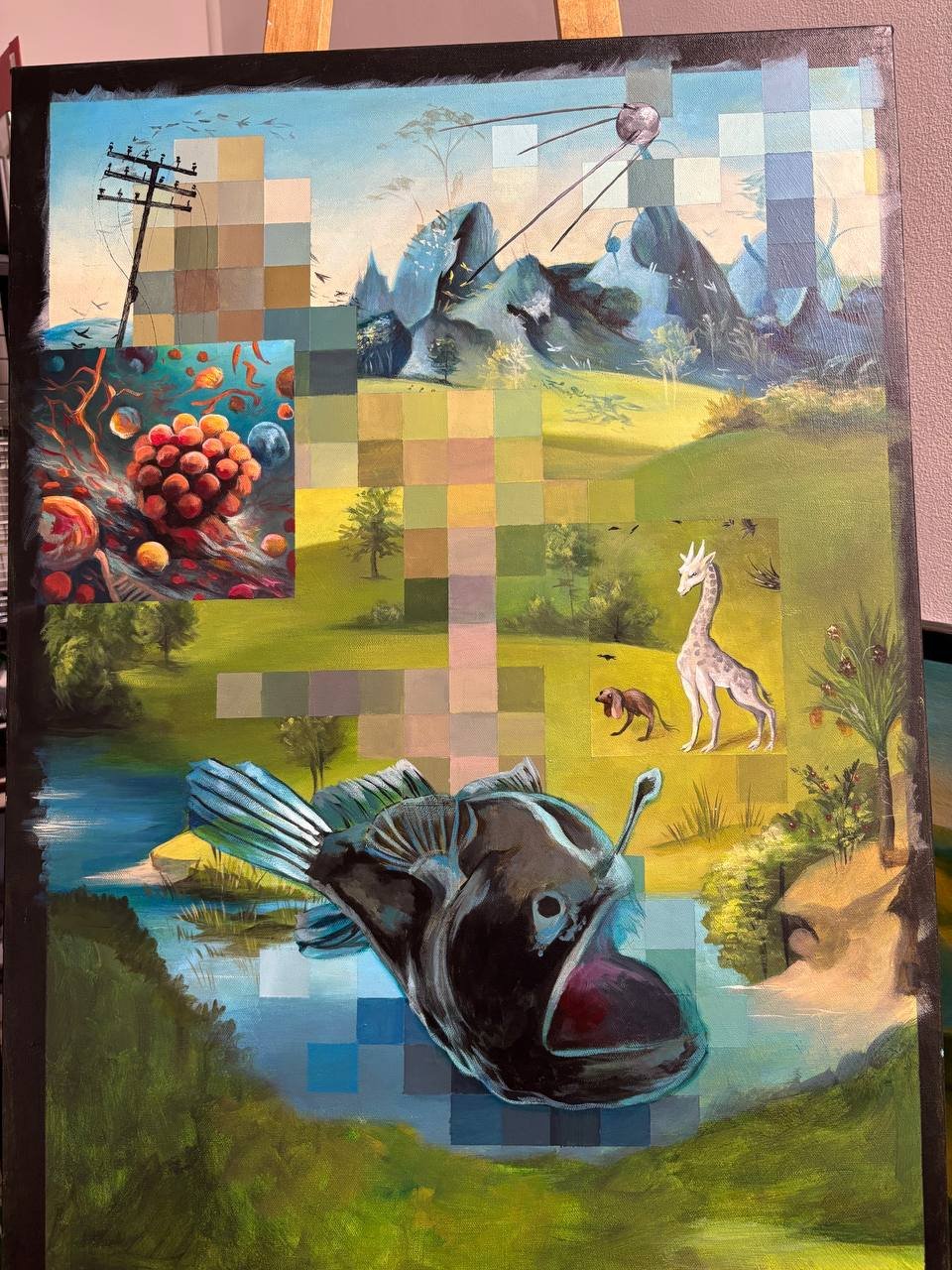
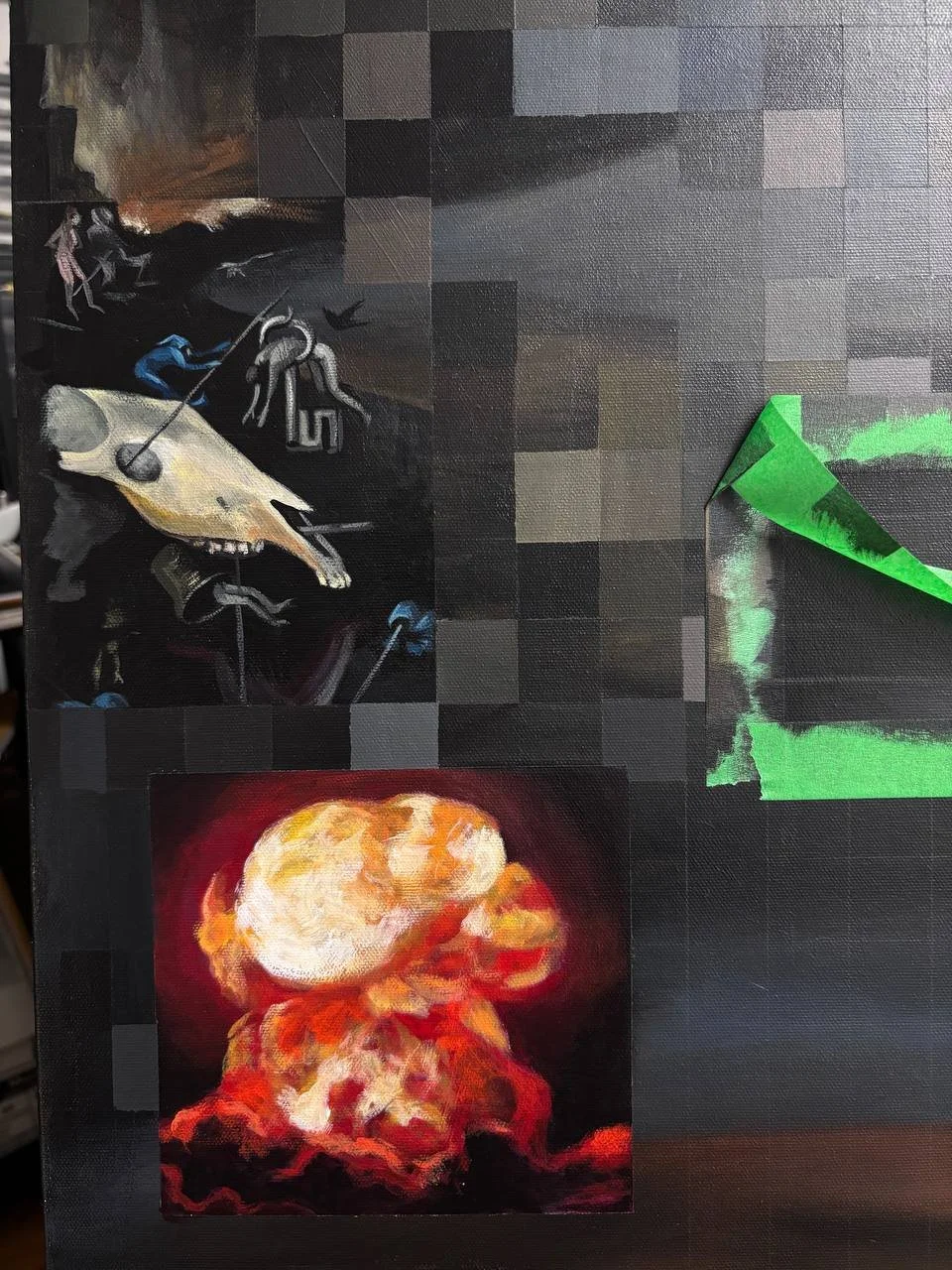
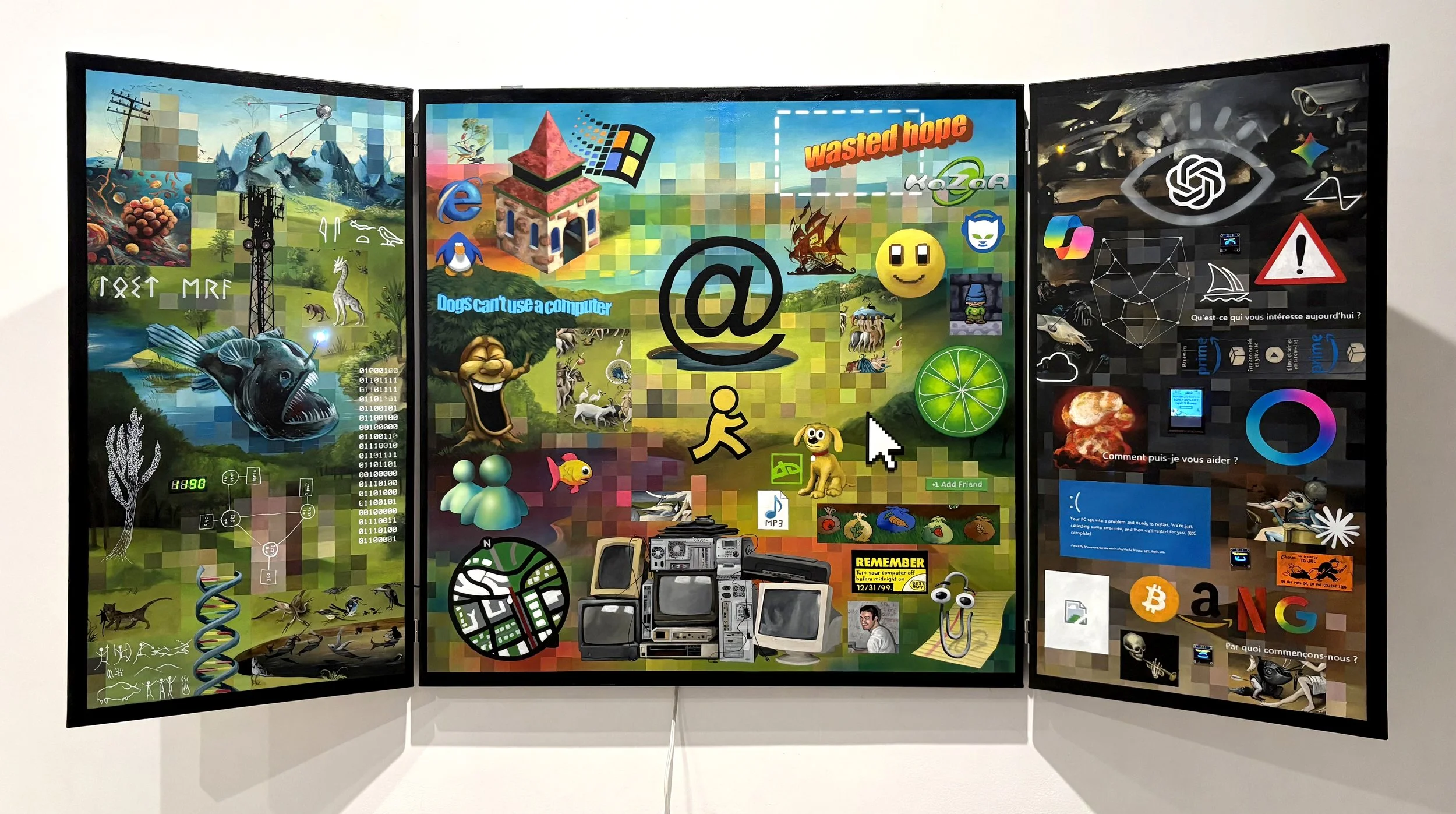
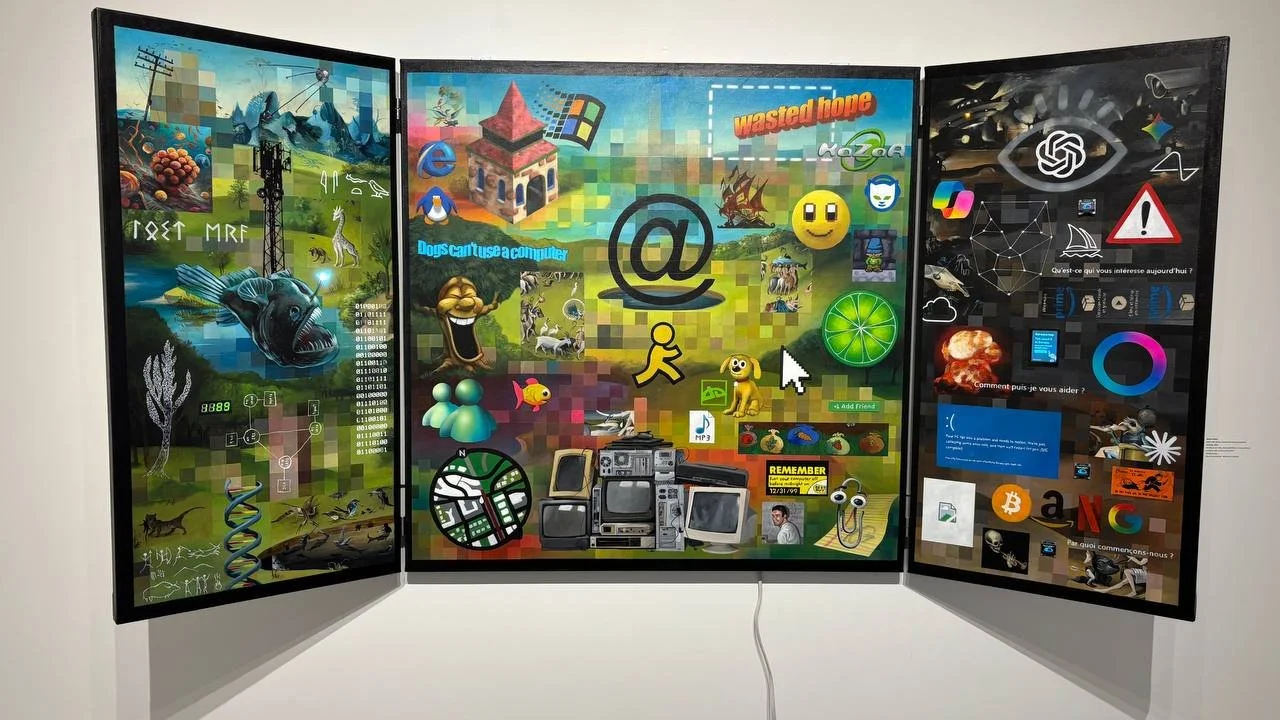
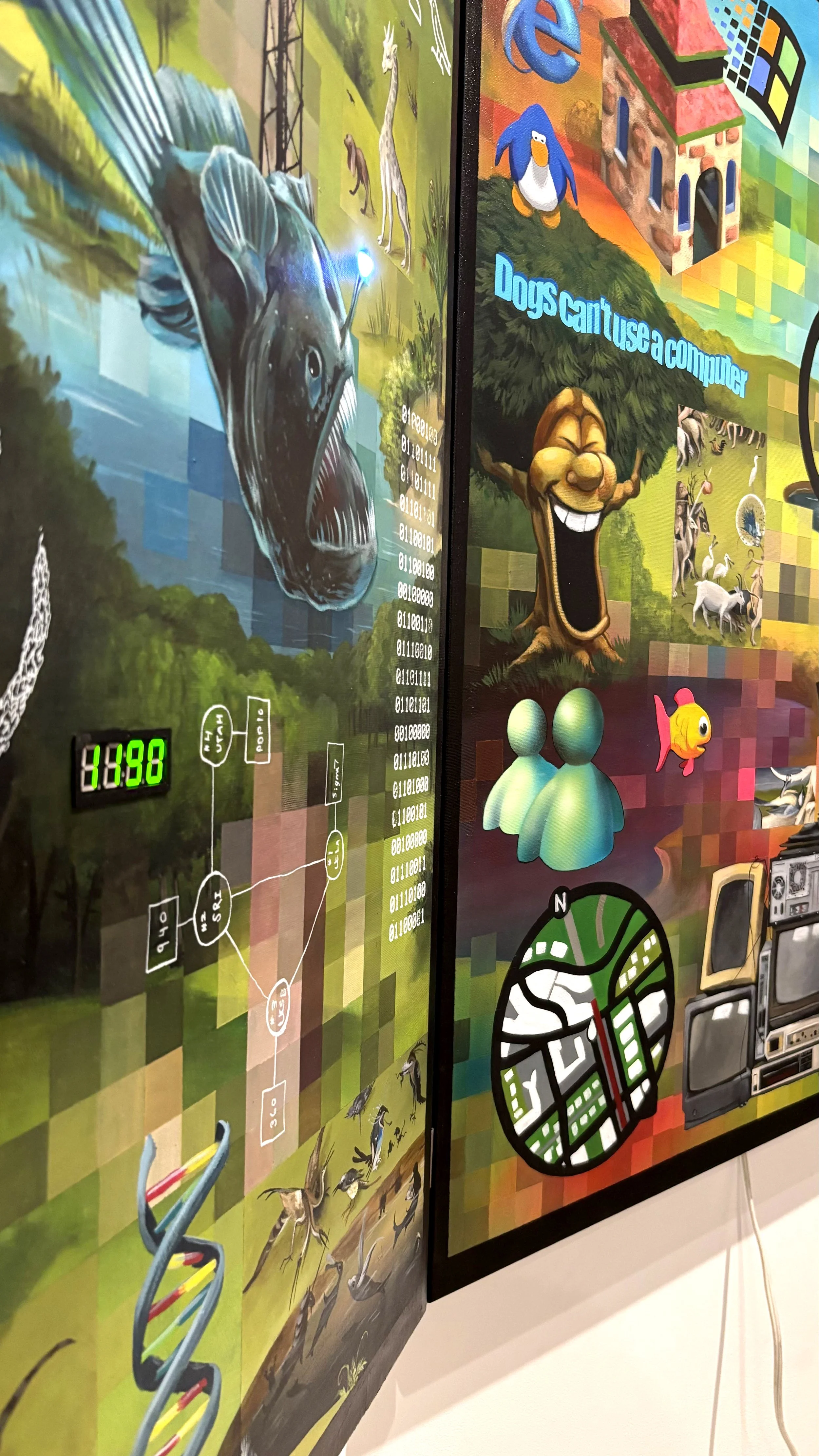
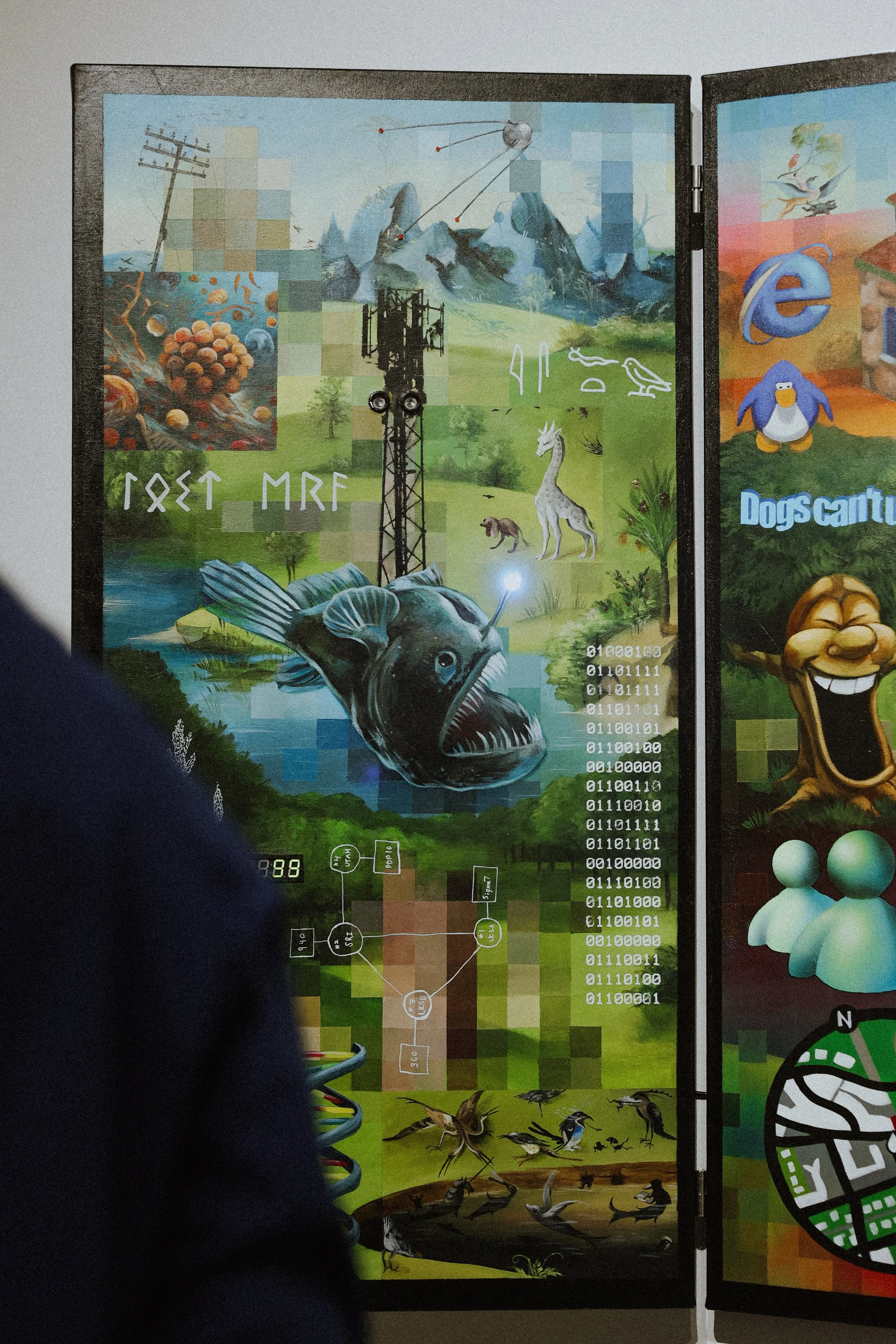
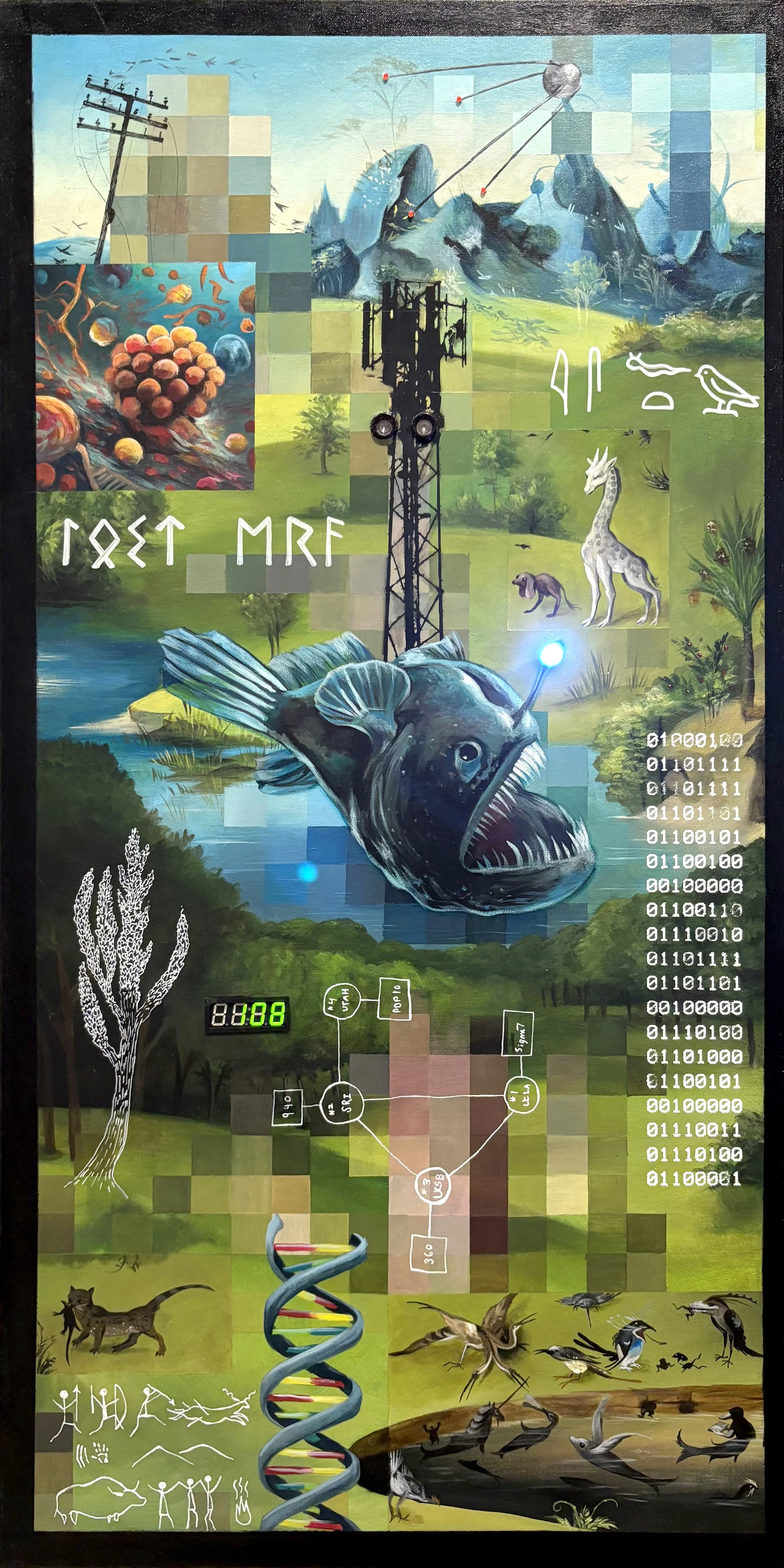
The first panel is about the origins of communication. It begins with hieroglyphs, rock paintings, Futhark runes, and eventually binary code, suggesting that the need to transmit meaning is as old as humanity itself. From there, the work moves into the first breakthroughs of long-distance connection: the telegraph pole, Sputnik, and the cellular tower, all treated as milestones.
A central diagram of ARPANET takes on an almost sacred role, replacing the traditional story of Adam and Eve with a network. The panel also draws a parallel with the beginnings of life, evoking primordial soup, DNA, and proto-organisms like prototaxites, as though information and existence were built from the same substance.
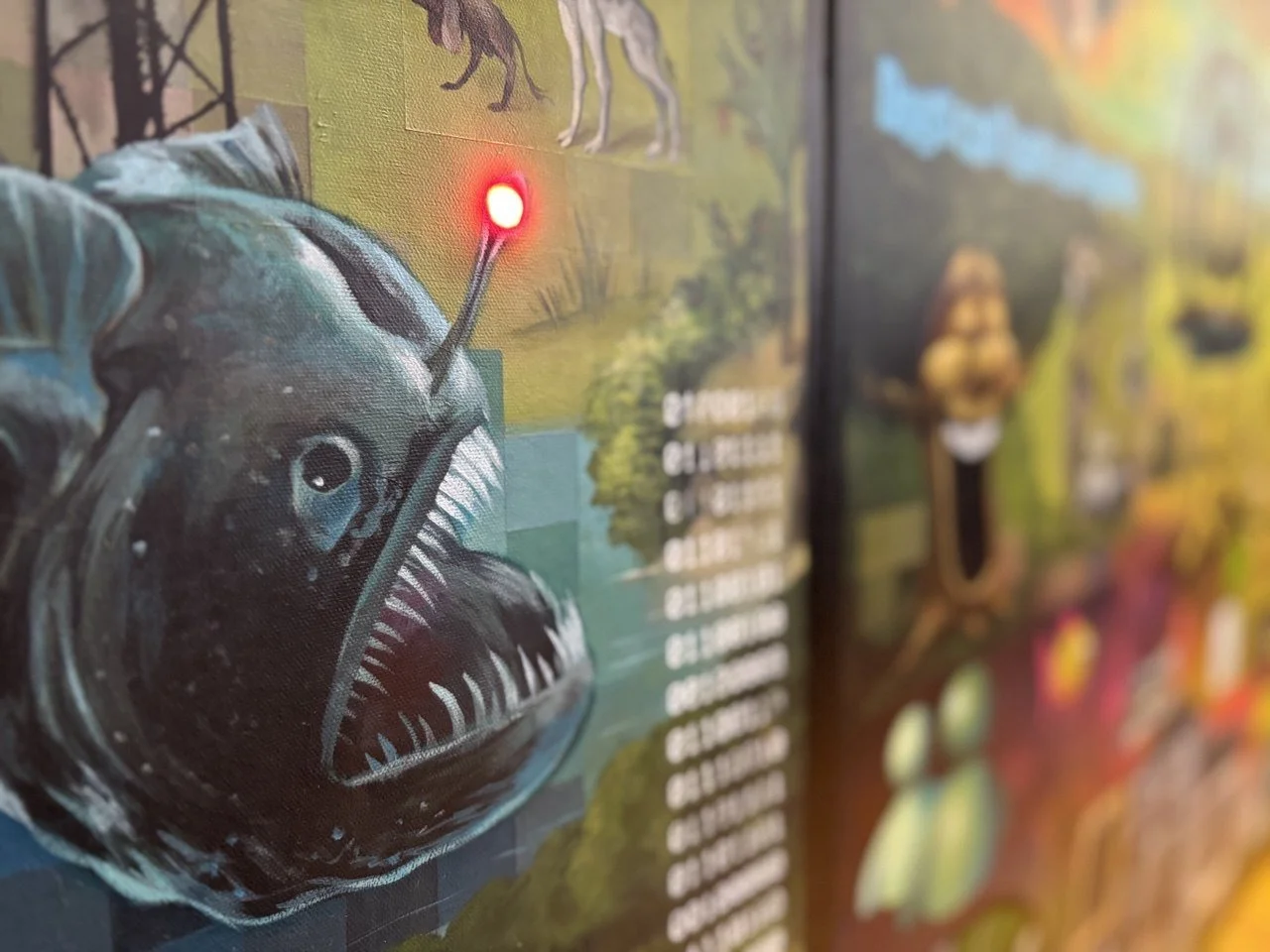
The panel also reveals the project’s origin, in a mise en abîme. The artist’s first idea was an installation about abyssal anglerfish, and that fish remains at the center, watching the viewer’s attention.
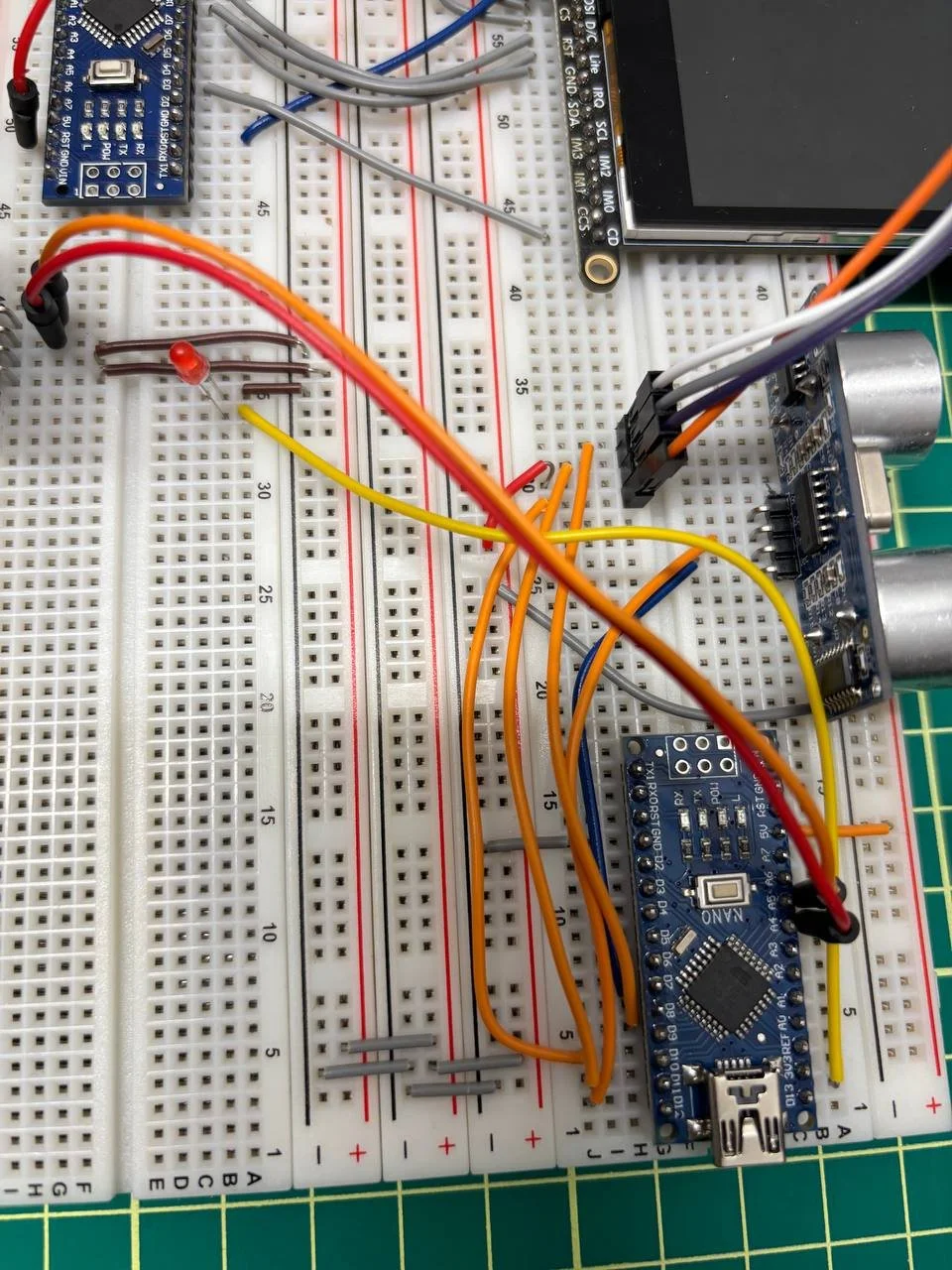
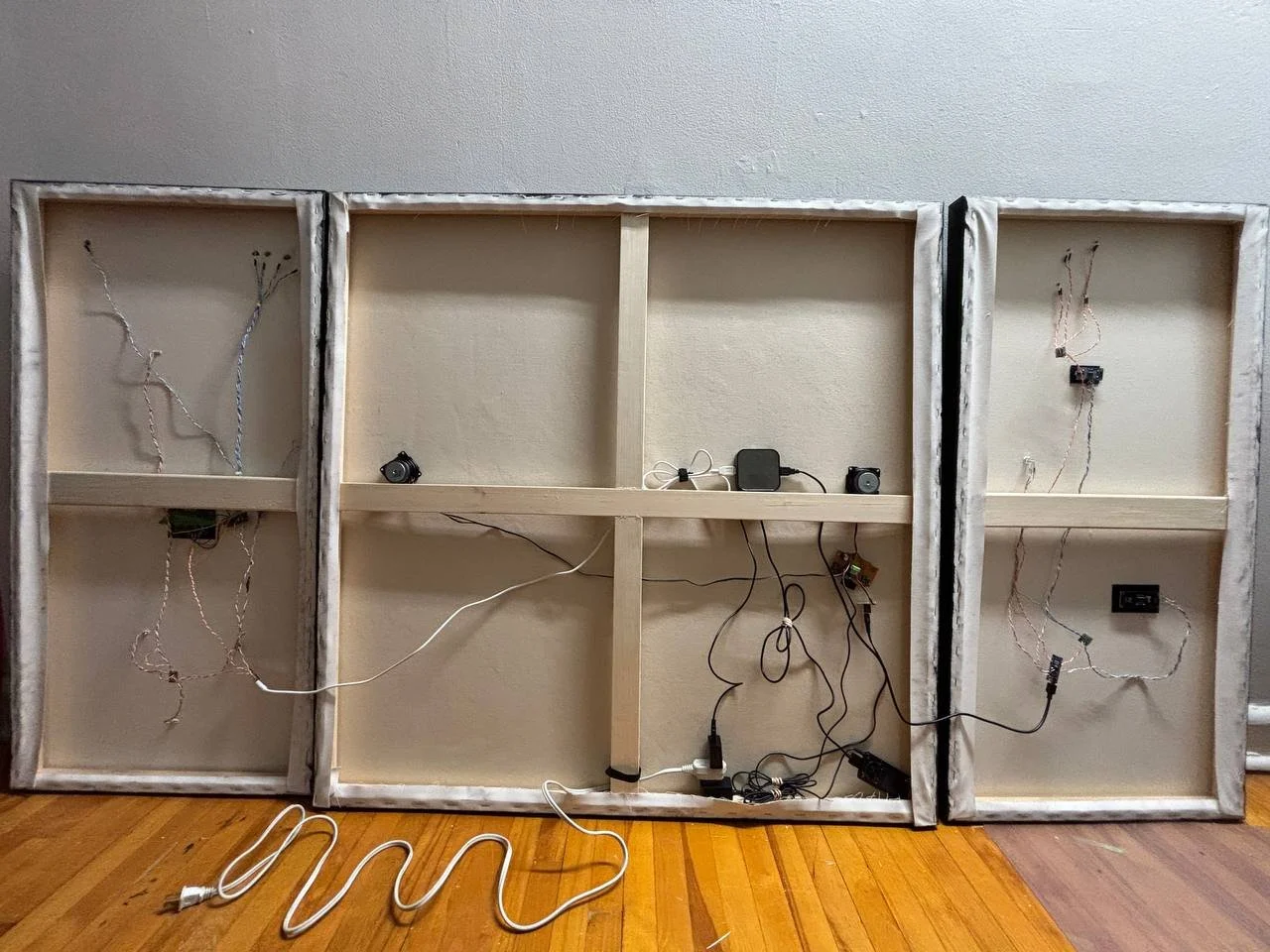
The panel is interactive: a hidden distance detector (HC-SR04) sits inside the cellular tower and shows the measured distance in centimeters on a small seven-segment screen. When a visitor gets too close, the fish’s light turns red.
“Jardin-des-delices_hieronymus-bosch_youtube-to-mp3.jpg”
Acrylic on canvas, LCD screens, Arduinos, LED lights, speakers (2026)
40×80 inches
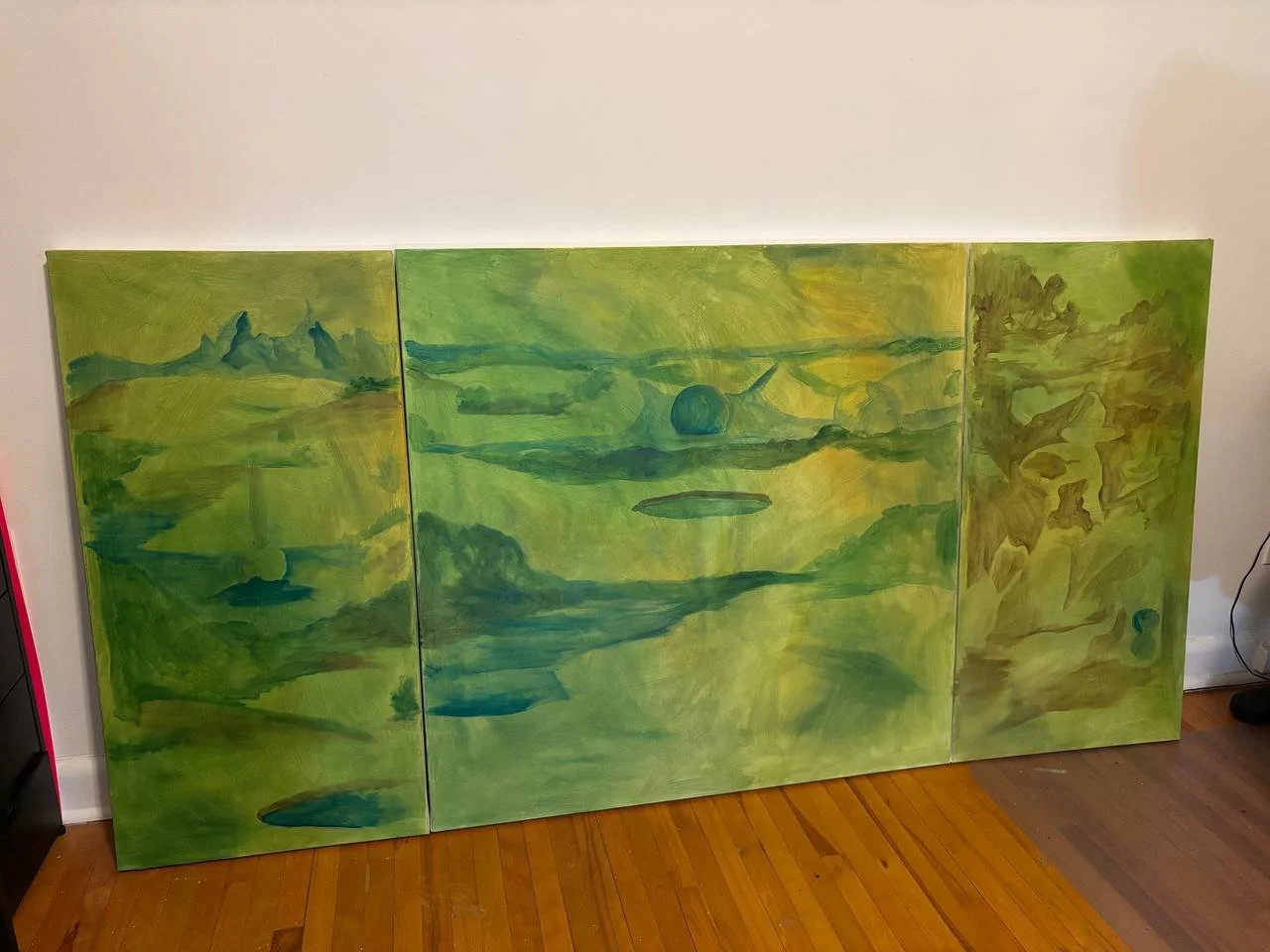
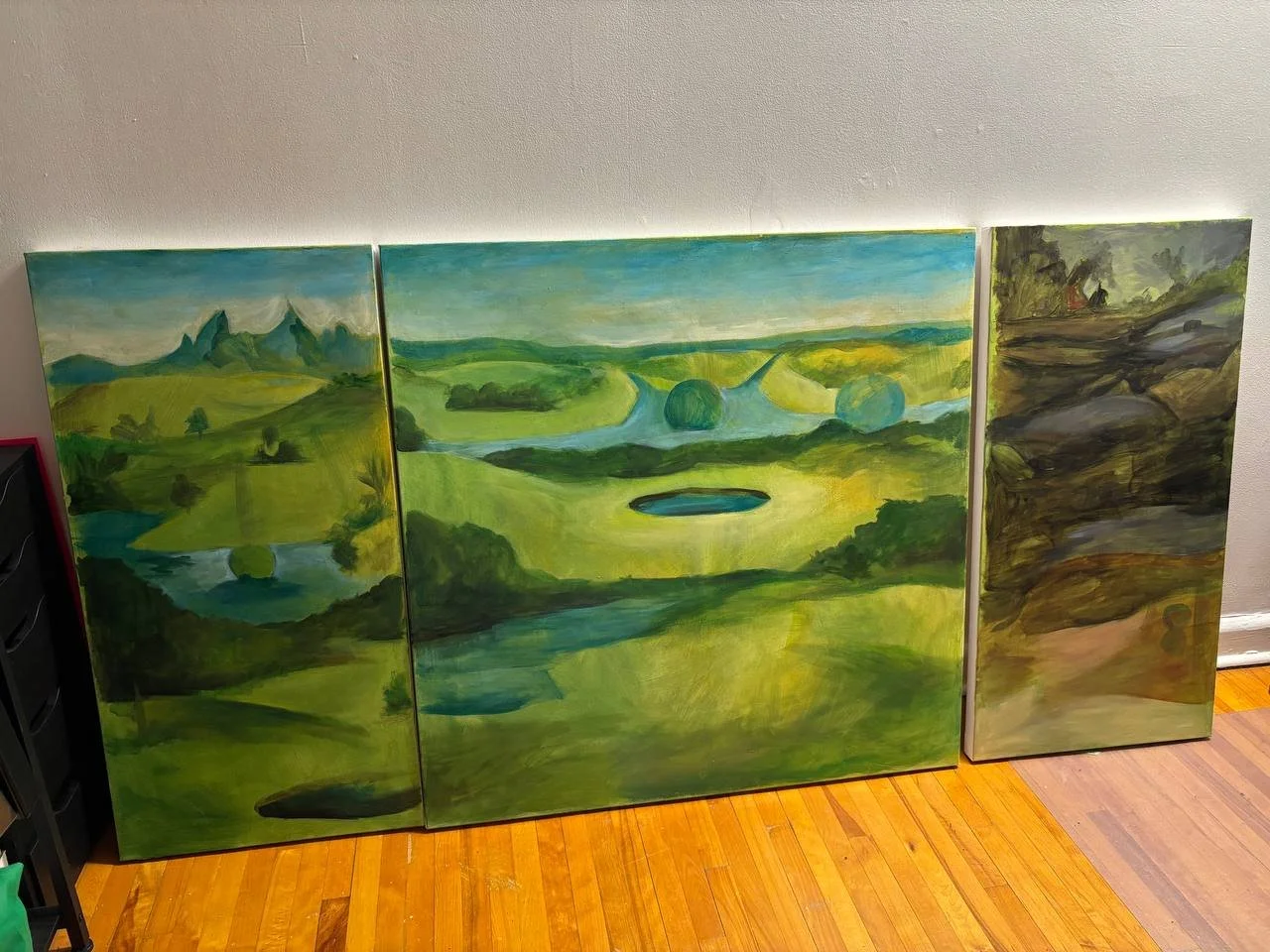
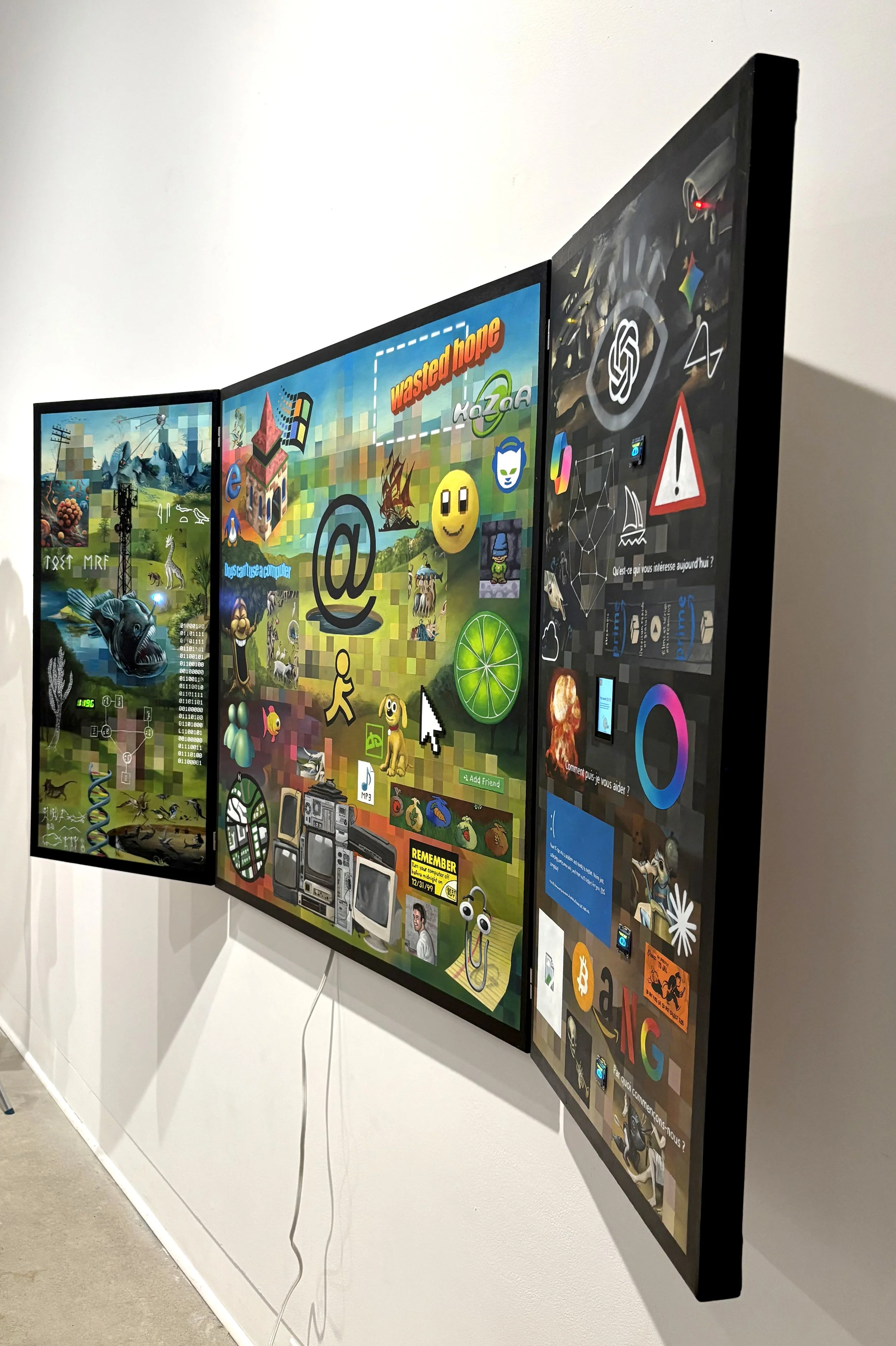
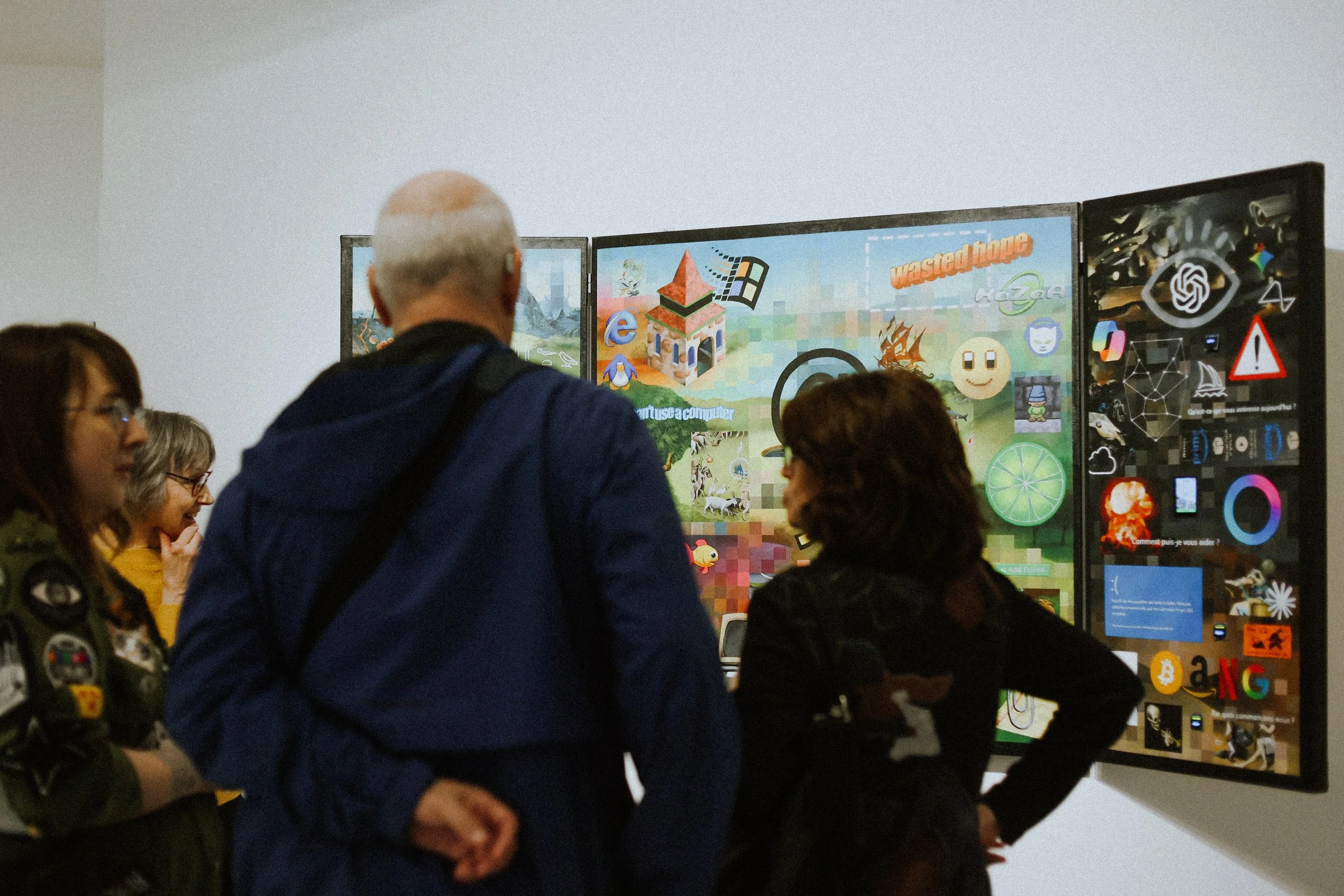
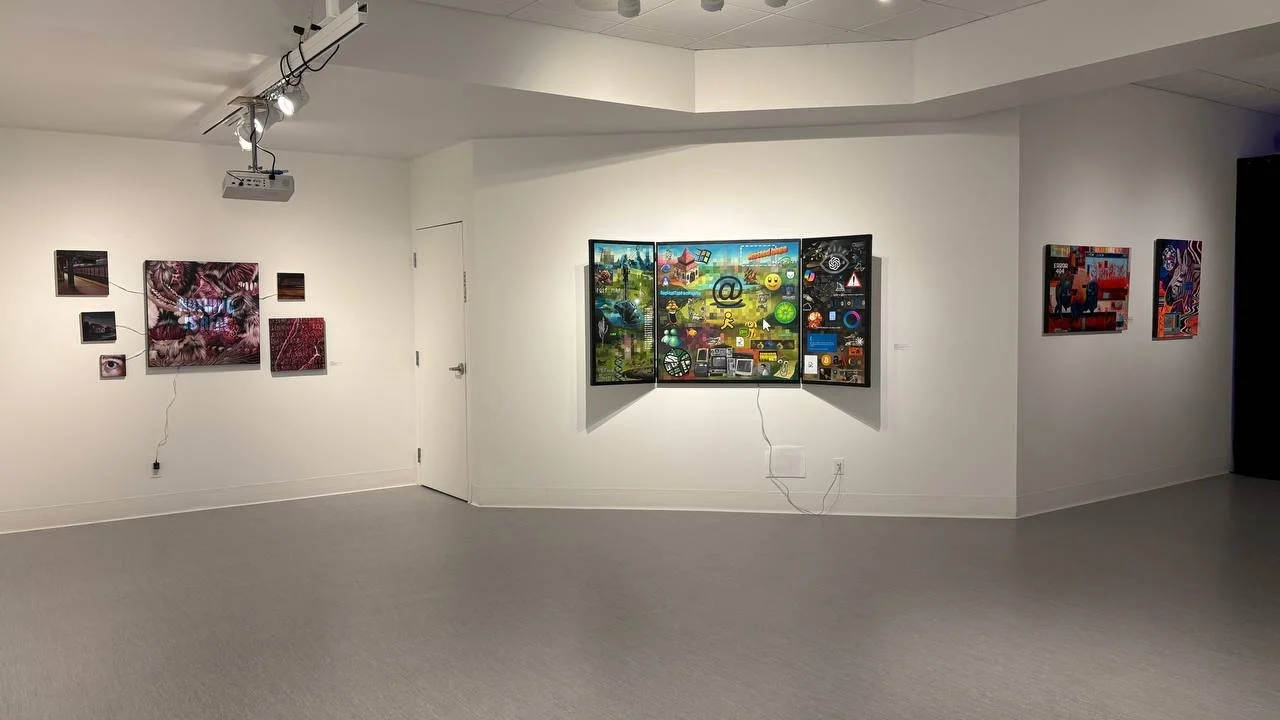
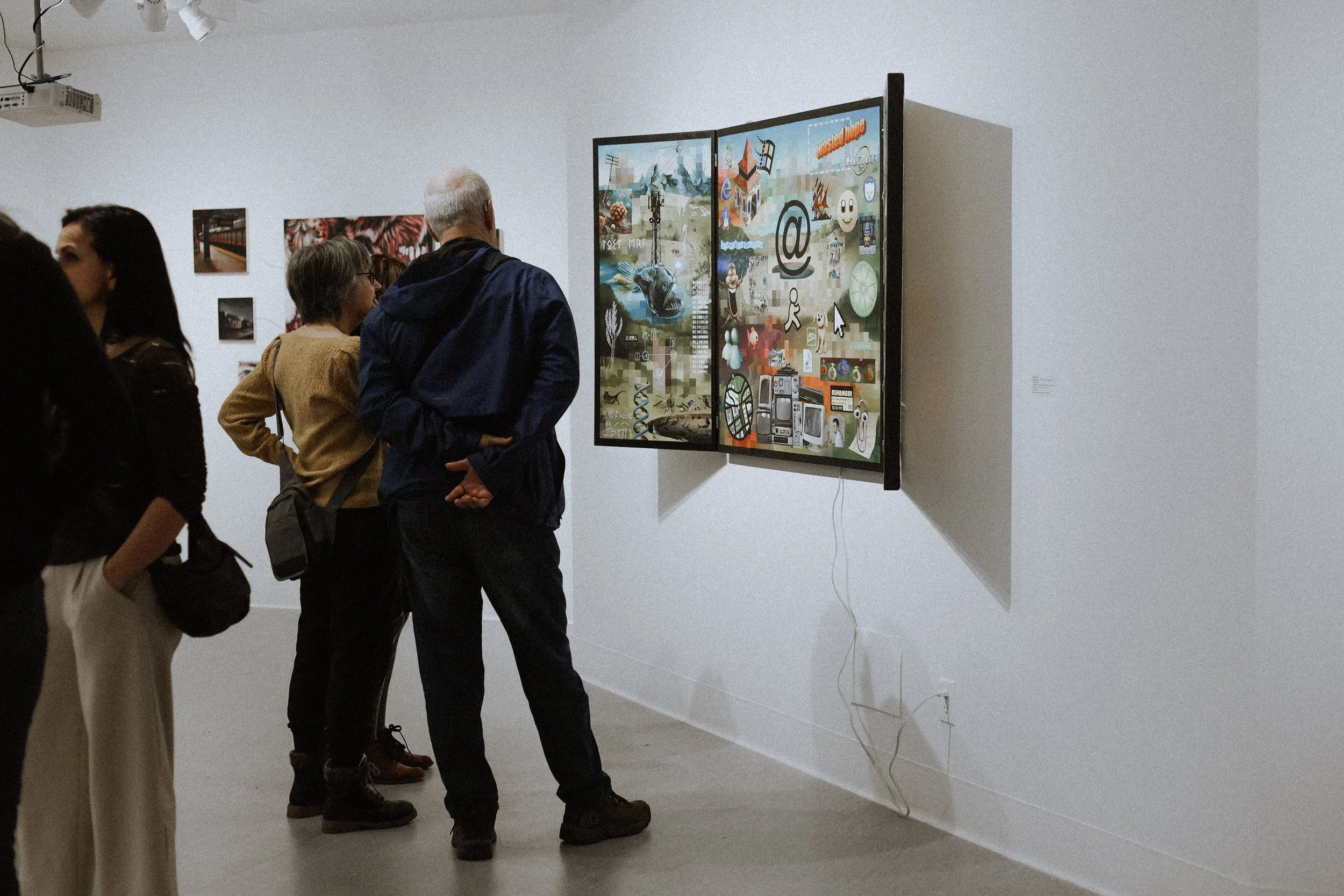
This is a large, three pannel interactive acrylic painting. It is Shana Patry’s final project in her Bachelor of Interdisciplinary arts at UQAC. Strongly inspired by Hieronymus Bosch’s Garden of Earthly Delights, it is built as a three-panel journey through time, moving from the origins of communication to the internet’s Golden Era and then into today’s AI-shaped landscape.
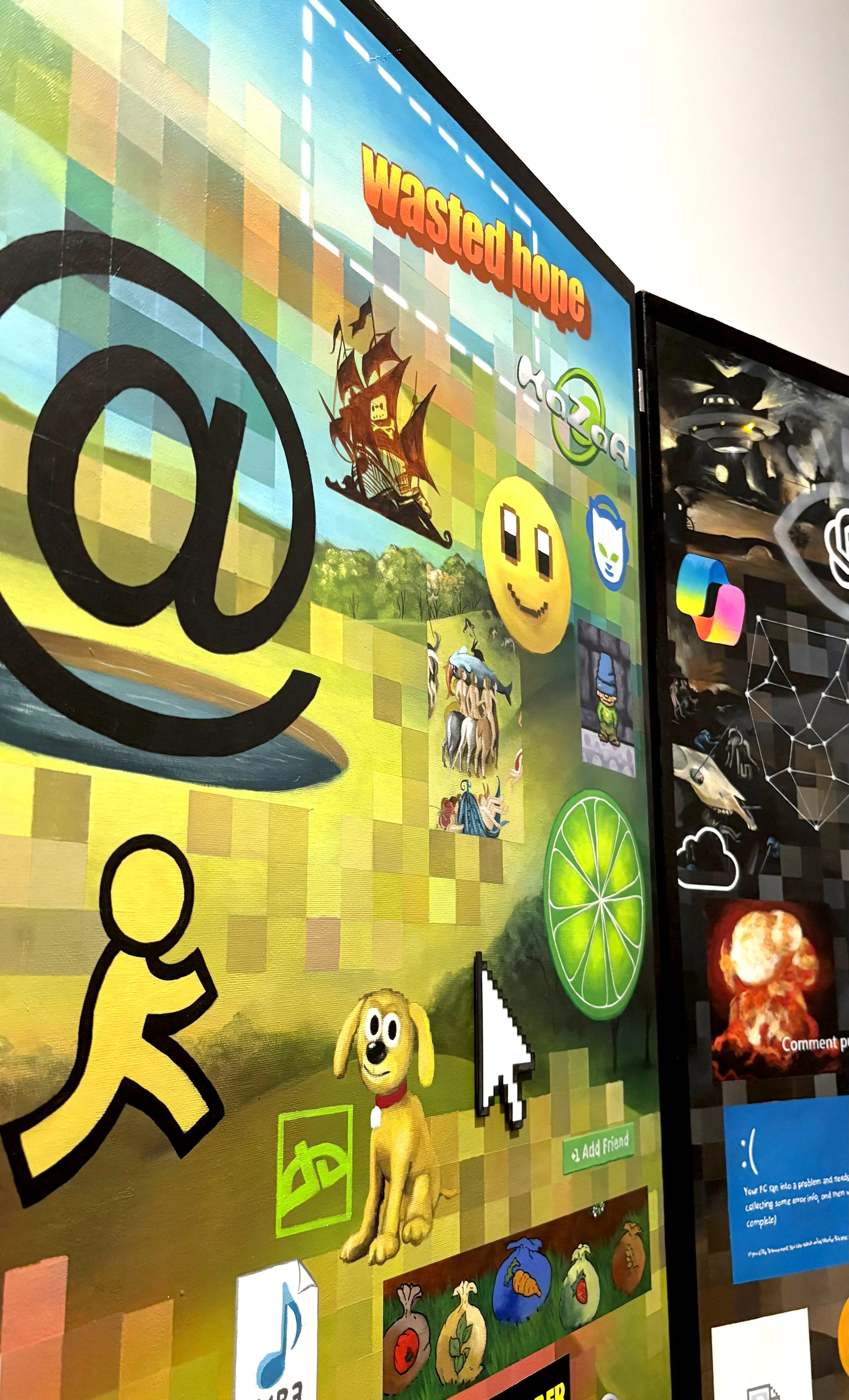
Middle panel - Golden Era
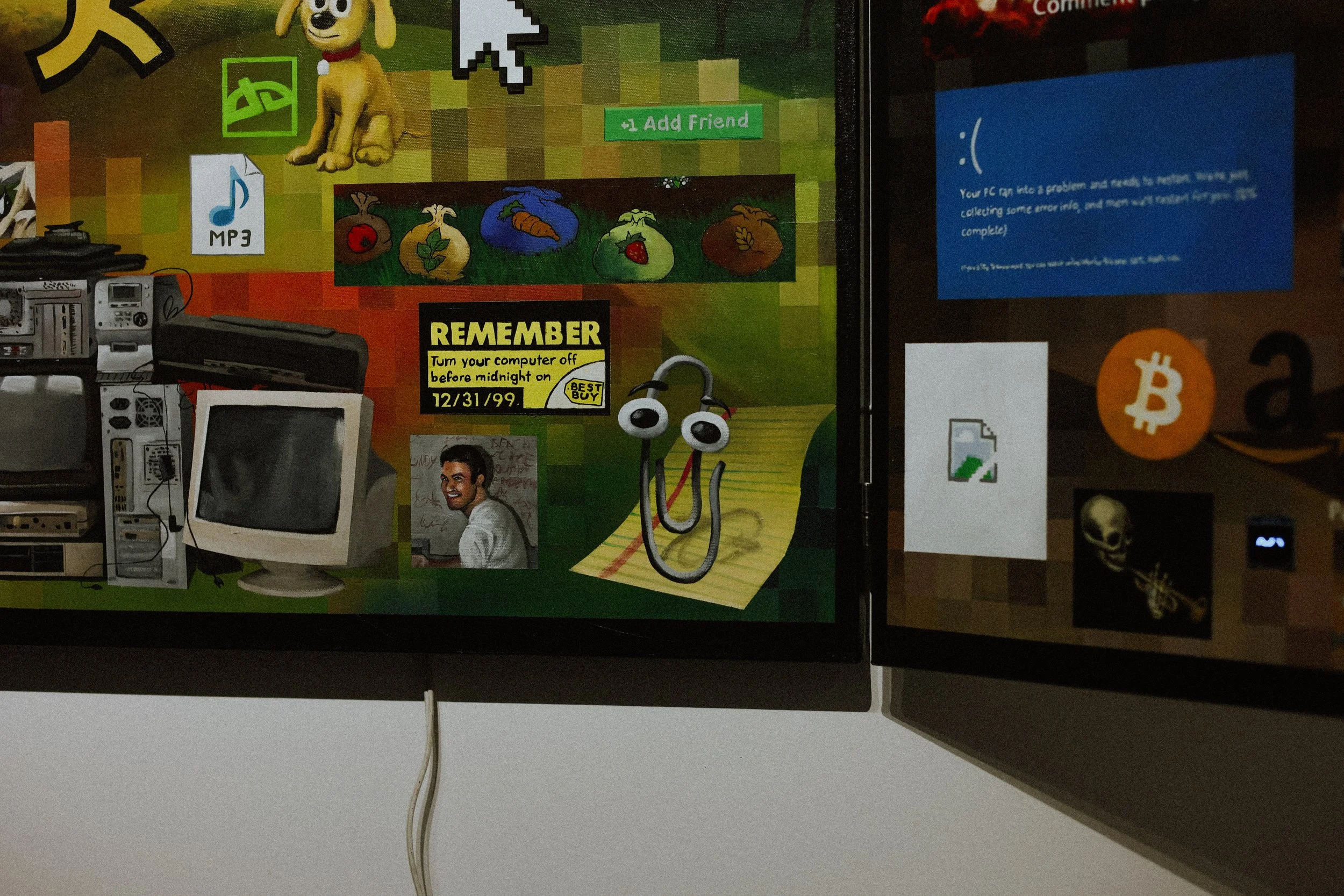
In Bosch’s original painting, the middle panel is all about having too much fun. Here, pleasure and consumption are suggested through the atmosphere of the early computer culture that felt limitless. It is centered on the “Golden Era” of the internet and computers, filled with recognizable moments from MSN Messenger, Club Penguin, Netscape, AOL, Adibou, Clippy, Roller Coaster Tycoon, the Y2K bug, and Tom from Myspace, among others.
At the same time, the panel is strongly about childhood. It treats nostalgia as something warm and communal, a positive association technology had for an entire generation, highlighted by the discreen rainbow tone of the background. In this zone, the screen feels magical, effervescent, and full of possibilities, tied to comfort, friendships, and simple pleasure.
Hidden behind the work, speakers and an MP3 play sounds from that time: Messenger’s message “wizz,” Winamp audio, dial-up tones, and various Windows XP sounds.
The nostalgia is not only visual, it’s triggered by sound.
Third panel - Current
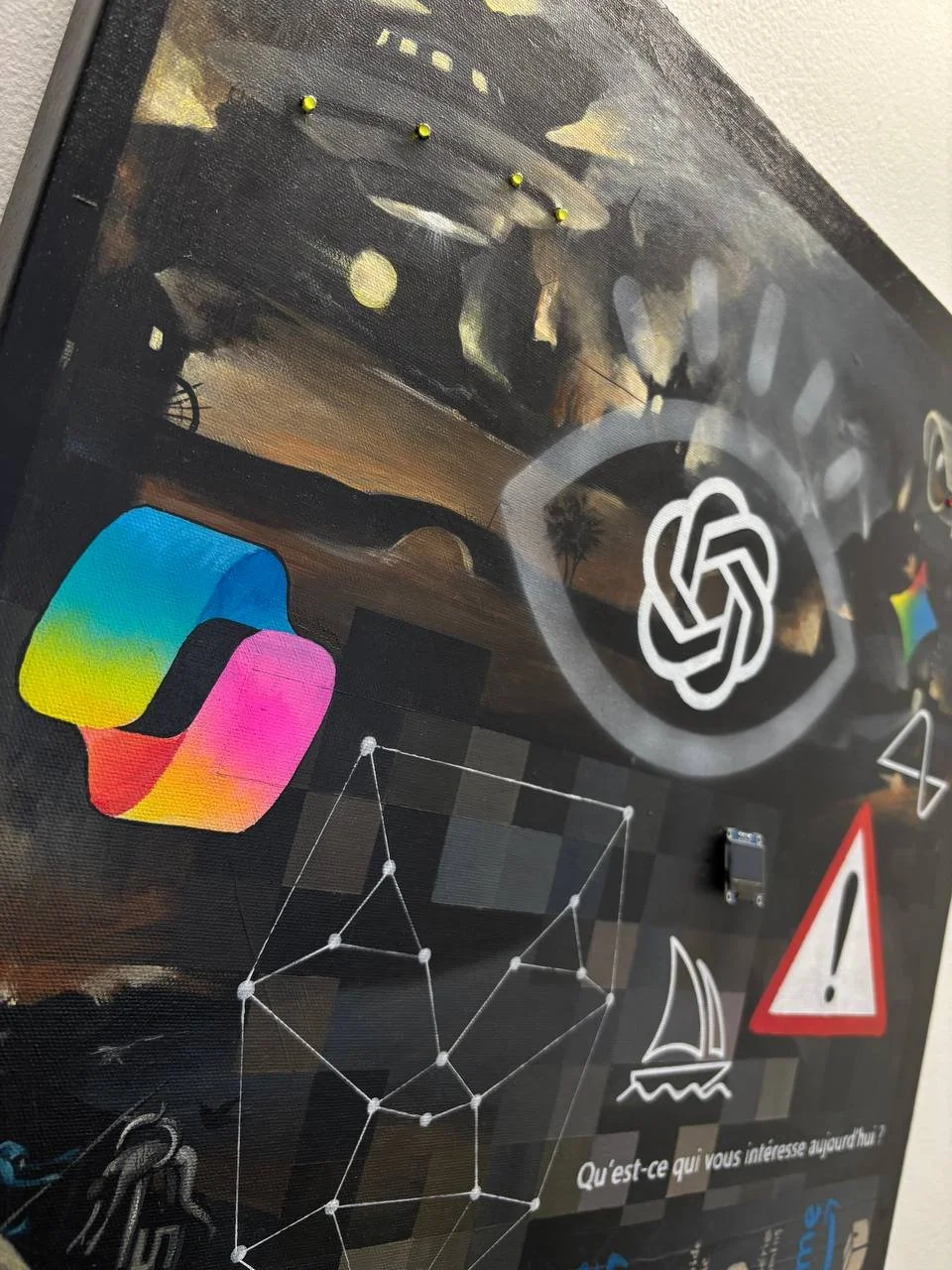
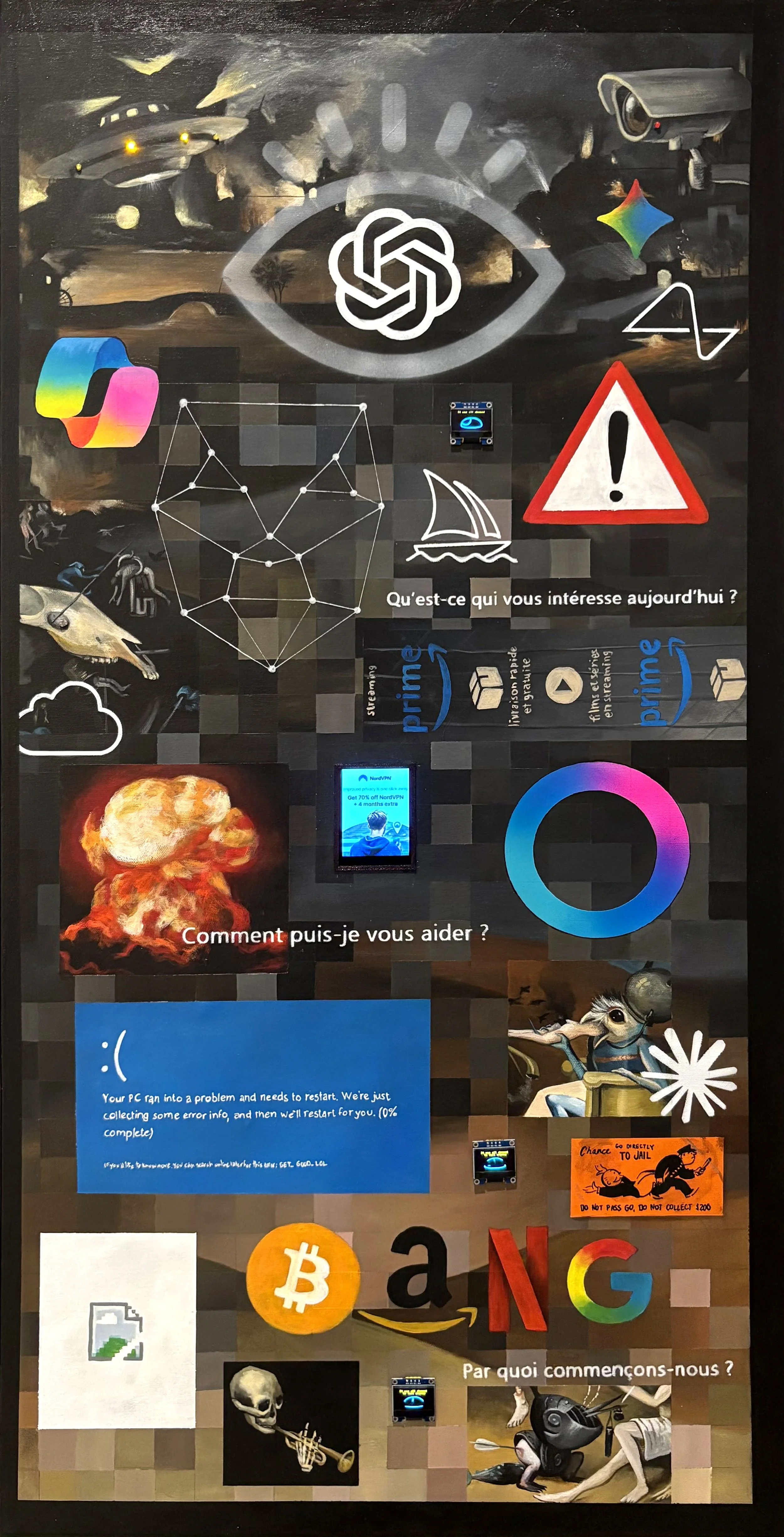
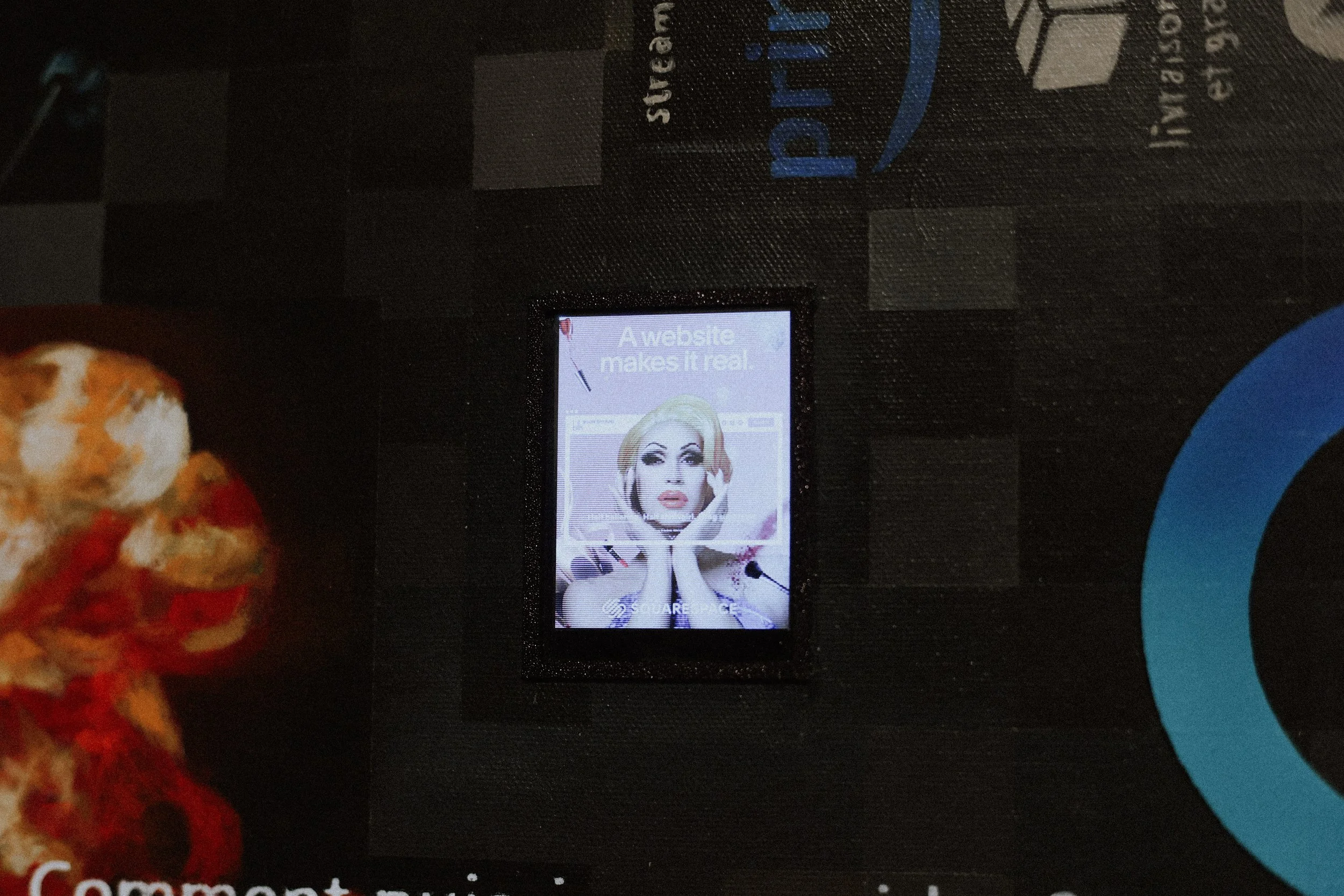
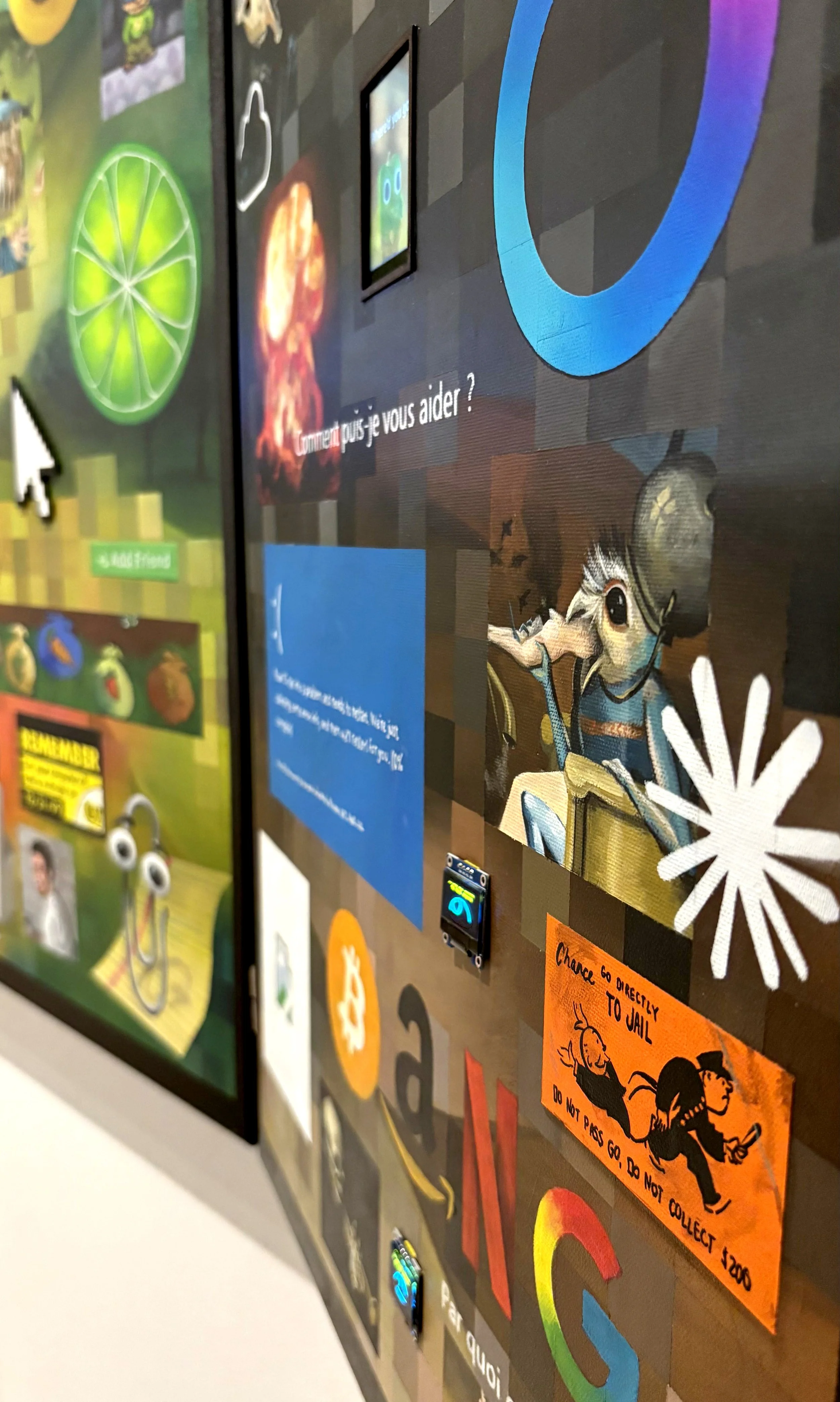
The final panel presents a dystopian vision of the contemporary technological landscape and its near future. Dominated by a central, all-seeing eye, the work evokes the surveillance state imagined by George Orwell in 1984.
Scattered throughout the composition are references to today's most pervasive artificial intelligence systems: Gemini, Claude, Copilot, Midjourney, and Meta AI. Familiar introductory phrases from ChatGPT such as “Comment puis-je vous aider?” appear as a recurring motif.
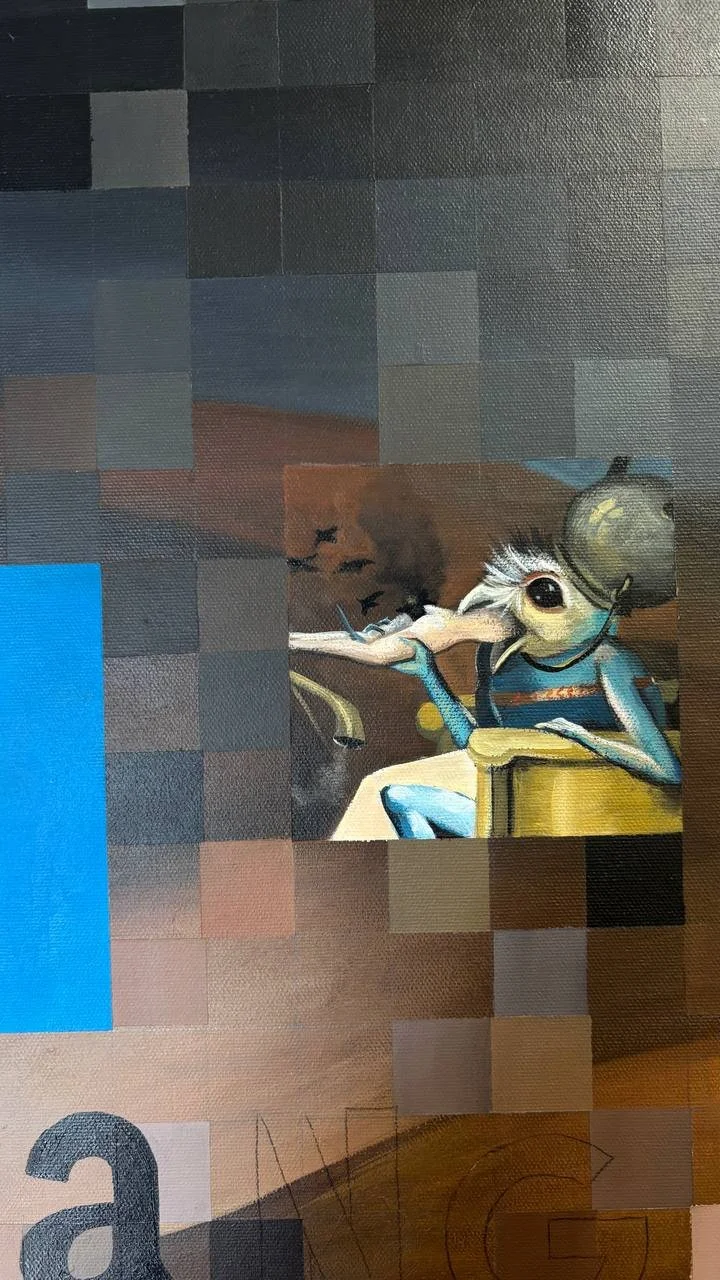
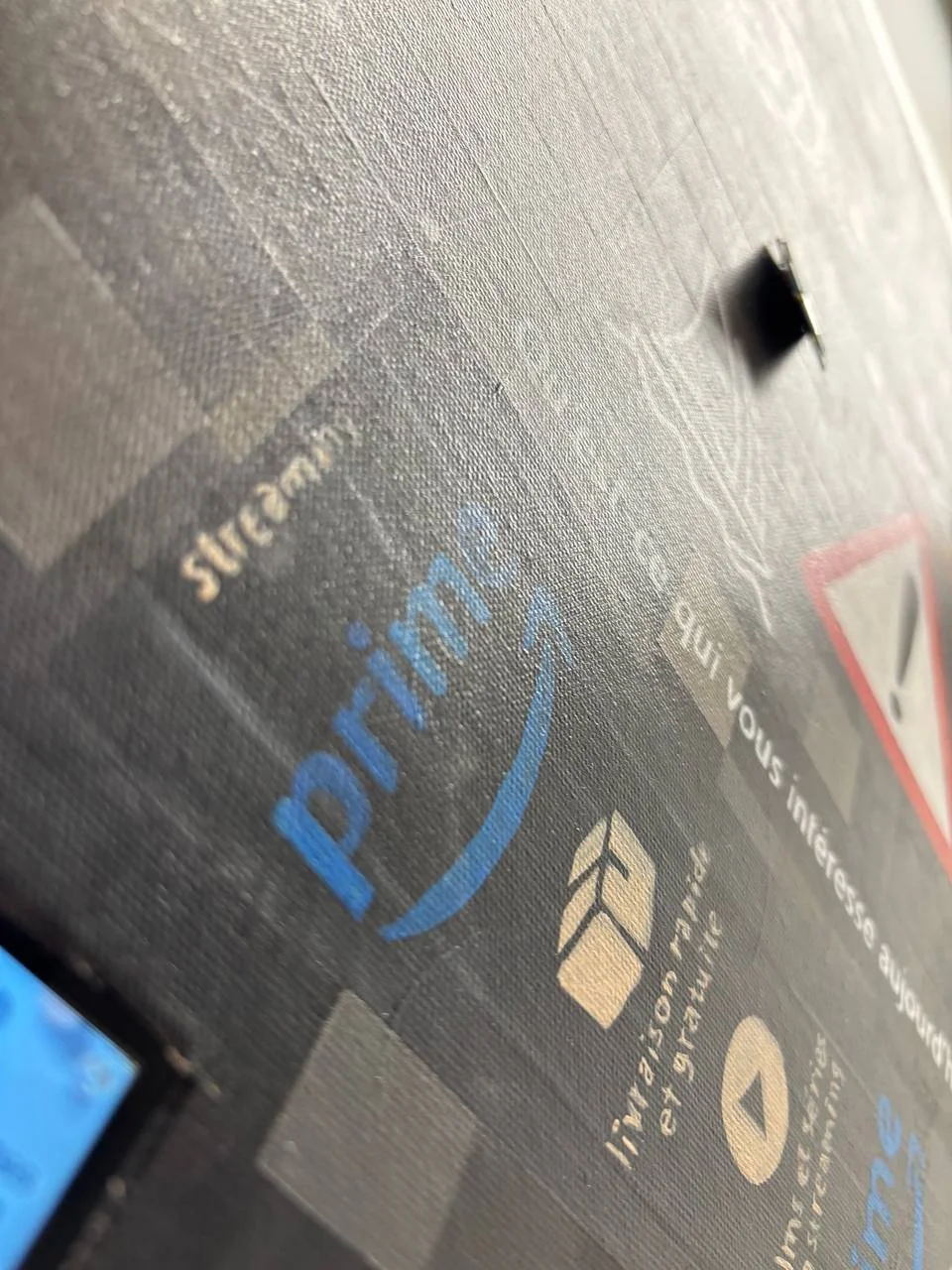
A fragmented face rendered in dots alludes to deepfake technologies and the increasingly unstable relationship between image, identity, and truth. Symbols of consumer culture, including Amazon Prime packaging tape and a Monopoly prison card, intertwine with the technological imagery, suggesting systems of control disguised as convenience.
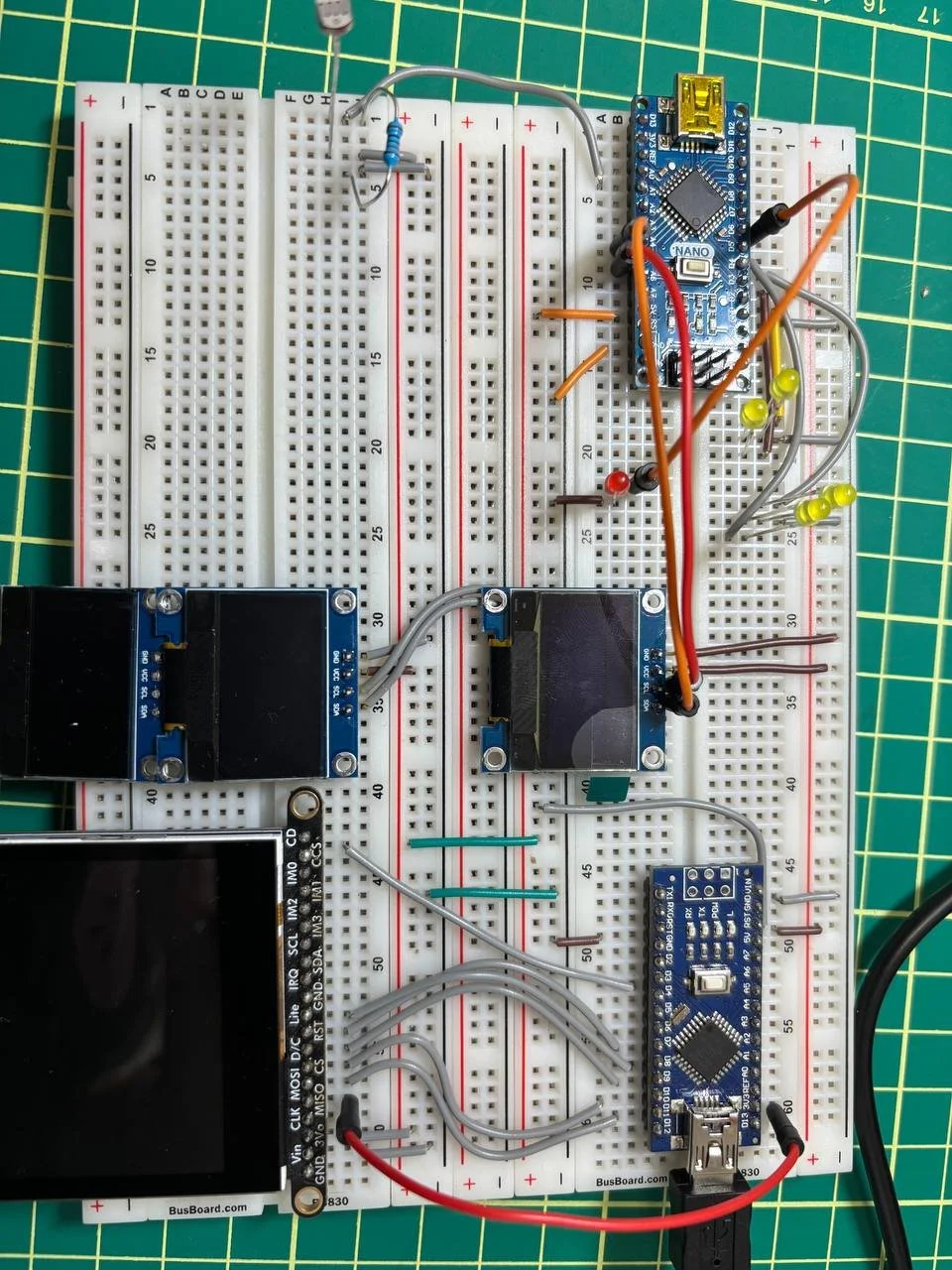
At the center, a miniature screen continuously cycles through ads, while hidden sensors activate dispersed displays, implicating viewers directly in the mechanisms of surveillance, participation, and influence.
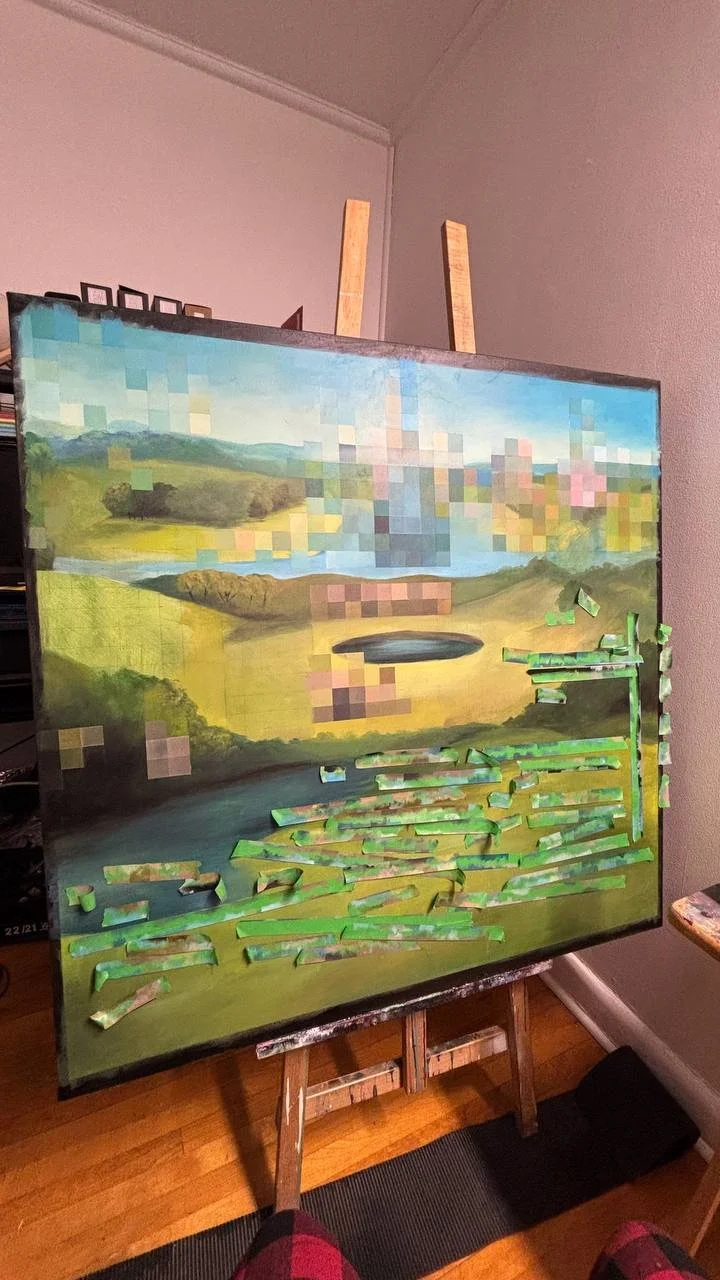
Process and MAKING OF